
Home Charging
Used EV Home Charging: The Complete Setup Guide
No dealer bundle, no free charger? This used EV home charging guide covers granny cables, choosing a 7kW smart charger, cheap tariffs and installation costs.
By Evova · Published
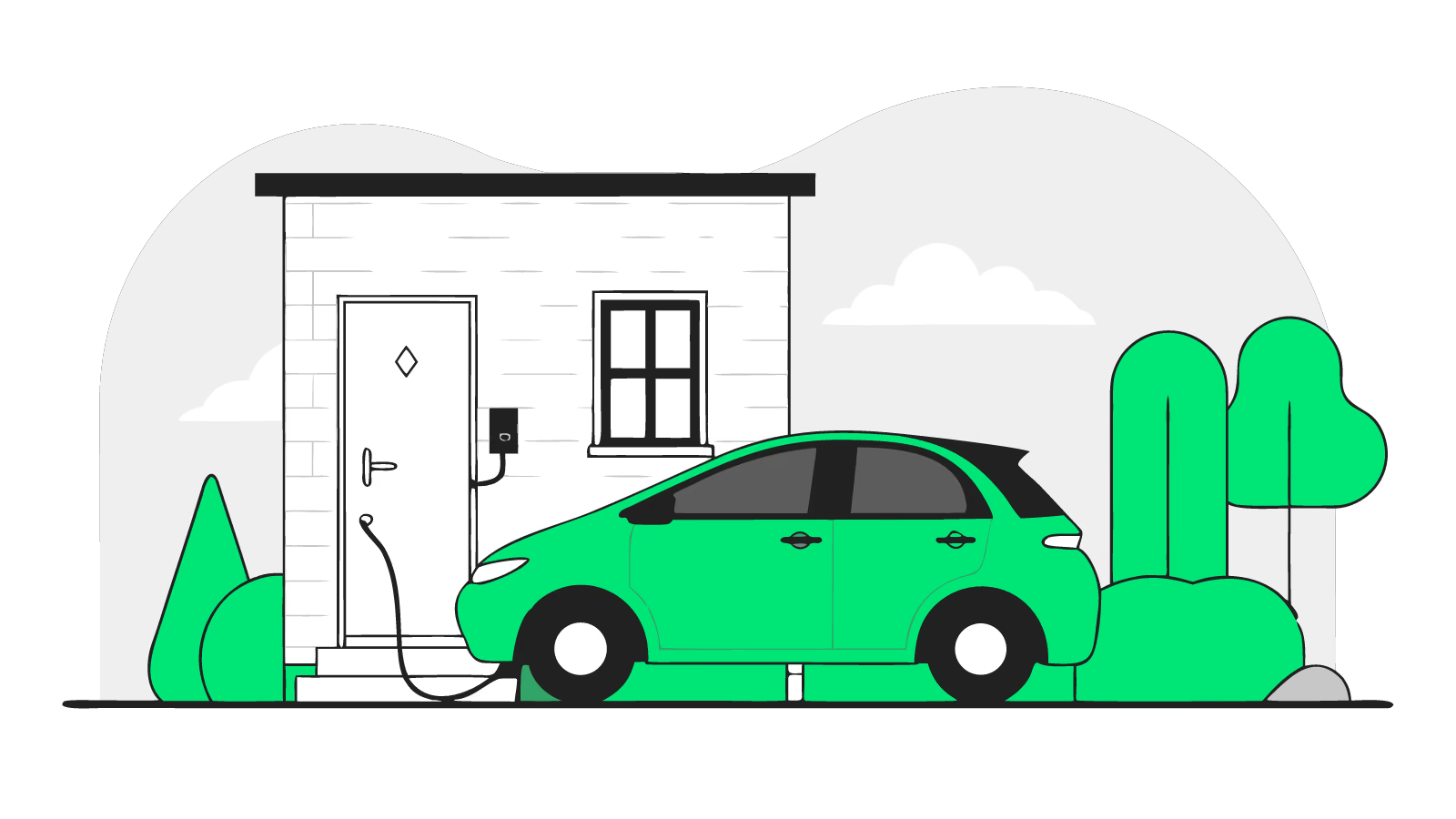
Just bought a used EV with no dealer bundle and no free charger thrown in? Here’s the short version: the 3-pin granny cable will keep you moving for now, but the setup that works long-term is a 7kW smart wallbox — typically £800-£1,200 fully installed for a standard job, per The Electric Car Scheme’s December 2025 research — paired with an off-peak EV tariff that drops your overnight rate to roughly a quarter of the standard price. The install itself usually completes in a single 2-4 hour visit. None of this depends on the car’s age: a 2018 hatchback benefits from cheap overnight charging just as much as a new SUV.
A granny cable will keep you moving — just not quickly
The 3-pin cable that may (or may not) have come with the car delivers around 2.3kW. Installer guides put that at roughly 8-10 miles of range per hour, so a 10-hour overnight charge adds something like 80-100 miles. For a low-mileage driver, that can genuinely be enough for a while — no shame in it.
But granny cables are designed for occasional and emergency use, not as a permanent daily solution. A dedicated 7kW wallbox adds roughly 25-30 miles of range per hour — about three times the speed — and, more importantly, it unlocks the smart tariffs that make an EV properly cheap to run.
Check what your used car can actually accept
Before buying any charger, check your car’s onboard AC charging rate. The wallbox doesn’t set the speed; the car’s onboard charger does. A Nissan Leaf, for example, takes AC at either 3.6kW or 6.6kW depending on spec, so a 3.6kW car charges at 3.6kW even on a 7kW unit. A 7kW wallbox is still usually the right buy — it costs little more and your next car will use it — but a slower onboard charger means the length of your cheap tariff window matters more than wallbox speed.
Two other checks worth making. Some older EVs use a Type 1 socket rather than today’s Type 2 — if yours does, an untethered charger you plug your own cable into is usually the flexible choice. And on the battery: there’s no legal requirement for a health certificate when a used EV changes hands, so it’s worth testing yourself. Options run from low-cost app-based estimates to independent plug-in diagnostic tests, and a well-kept EV typically loses only around 1-2% of battery capacity a year — so a three-year-old car showing a state of health in the mid-90s per cent is normal.
Choosing a 7kW smart charger
Every new home chargepoint sold in Great Britain must be smart by law (the 2021 smart chargepoint regulations). Out of the box they’re pre-set not to charge during weekday peaks — 8-11am and 4-10pm — though you can override this, and they apply a short randomised delay when starting a charge. In practice that’s a feature: the scheduling is exactly what lets you target cheap overnight rates.
Wallboxes are built for outdoor mounting — the myenergi zappi, for instance, is rated IP65 and operates from -25°C to +40°C — so no garage is needed. Browse our charger comparisons and the wider home charging hub to narrow down models — if you’re keeping costs down, the Sync Energy Wall Charger 2, VCHRGD Seven Pro and Ohme ePod sit at the budget end of the market.
The tariff is where a used EV really pays off
As of July 2026, the Ofgem price cap puts a typical unit rate at 26.11p/kWh (1 July - 30 September 2026 period). EV tariffs beat that heavily overnight: Intelligent Octopus Go offers around 7p/kWh in a guaranteed 23:30-05:30 window — roughly a quarter of the capped rate — with the cheap rate applying to your whole home during the window. You’ll need a smart meter and a compatible car or charger. On a used EV bought at a sensible price, this is where the running-cost maths gets genuinely satisfying.
Installation, costs and the grant question
A standard 7kW installation completes in a single visit, typically 2-4 hours. Here’s what research puts the numbers at:
| Item | Typical cost | Notes |
|---|---|---|
| Standard 7kW install (supply + fit) | £800-£1,200 | Includes up to 10m of surface-mounted cable and a new dedicated circuit |
| Charger hardware alone | £450-£800 | Varies by brand, tethered vs untethered |
| Consumer unit upgrade (if needed) | £300-£600 | Older fuse boards may need work first |
| Cable runs beyond 10m | £10-£20 per metre | Long runs to detached garages add up |
| Groundworks / trenching | £200-£500 | Where cable must cross ground rather than follow a wall |
Figures from The Electric Car Scheme (updated December 2025; last checked July 2026). Your price depends on your property, not a national average.
What pushes cost up is mostly distance and electrics: how far the charger sits from your consumer unit, whether that unit has space and is in good order, and whether cable has to cross ground. Your installer must also notify your electricity network operator (DNO); homes with a looped (shared) supply or a small main fuse may need remedial work first, which the DNO may or may not charge for. None of this is your job to diagnose — the installer you choose will check your supply and consumer unit as part of the quote.
On grants: if you own a house with a driveway, you generally won’t qualify. The EV chargepoint grant — up to £500 per socket since 1 April 2026, covering 75% of the cost, funded until at least 31 March 2027 — targets renters and flat owners, with separate routes for on-street-only households and landlords. Where it applies, the OZEV-authorised installer claims it for you.
To get moving, find an installer near you or request a free quote and compare two or three prices for your specific property.
Grant rules changed as recently as April 2026 and energy prices move quarterly, so treat the figures here as a July 2026 snapshot — check GOV.UK for current grant eligibility and Ofgem for the latest price cap before you budget.